2026 Best Way to Check Brake Lines for Air Bubbles?

Time:2026-11-05 Author:Madeline
0%

Air in a brake line can make the pedal feel soft, sink under steady pressure, or respond unpredictably. The symptoms deserve attention, but they do not prove that air is the only cause. A fluid leak, worn component, or other fault can feel similar. How to check brake line for air bubbles begins with a careful visual inspection: look for wet fittings, cracked hoses, low fluid, and bubbles moving through a clear bleed hose during proper bleeding. Keep the vehicle level, use the specified brake fluid, and follow its service manual.

For a clearly illustrative expert voice, brake-service educator Jordan Lee puts the key point this way: “A firm pedal matters, but inspect for leaks before blaming air.” This is an original editorial quote, not a sourced statement from a real technician. That distinction matters. A trustworthy diagnosis should come from observed evidence, not a confident-sounding quote or a single pedal test.

Watch the reservoir, too. Never let it run dry during bleeding, since that can introduce more air. Tiny bubbles in a hose may be misleading if the connection draws in outside air. Check the setup. If the pedal remains spongy, fluid keeps dropping, or you find a leak, stop driving and have a qualified technician inspect the system. Brake problems leave little room for guesswork. A quick check is useful; it is not a substitute for a complete repair and safety check.
2026 Best Way to Check Brake Lines for Air Bubbles?

How Air Enters Brake Lines and Affects Braking

Air enters hydraulic brake lines when a leak admits air, a hose or caliper is replaced, or the system is opened during service. Low fluid can also expose the master-cylinder ports and draw air into the circuit. Unlike brake fluid, air compresses. The pedal may feel soft or sink farther than usual, while braking becomes delayed or uneven. A longer stopping distance can follow. Even a small bubble can disrupt pressure transfer.

The U.S. National Highway Traffic Safety Administration’s Federal Motor Vehicle Safety Standard No. 135 sets stopping-performance tests for light vehicles, including tests from 100 km/h. Many passenger cars must meet a 70-metre stopping-distance limit under specified test conditions. This is a vehicle-performance benchmark, not a measurement of how much air a brake line can safely contain. A spongy pedal deserves attention even if the car still stops. Feel alone is not a reliable test.

Air can enter through corroded fittings, damaged flexible hoses, loose bleeder screws, or poor bleeding technique. Look for wet spots near each wheel, along metal lines, and around the master cylinder; brake fluid can collect as a dark, slick patch. Check the reservoir level, but do not treat topping it up as a repair. It may hide a leak. A careful inspection and correct bleeding procedure matter, and the process can vary by vehicle. I used to think repeated pedal pumping proved the system was sound. It doesn’t. If the pedal sinks or braking changes, avoid driving and have the system inspected by a qualified technician.

Prepare the Vehicle and Tools for a Safe Inspection

Park on firm, level ground, switch off the engine, and let hot components cool. Apply the parking brake and chock the wheels before lifting anything. Use a correctly rated jack and axle stands; never rely on a jack alone. Keep the vehicle stable. NHTSA’s 2022 Traffic Safety Facts recorded 42,514 U.S. traffic deaths. That figure does not identify brake failures, but it shows why careful vehicle maintenance deserves attention.

Gather eye protection, gloves, a flashlight, clean cloths, the correct brake fluid, and a clear hose with a catch container if bleeding is needed. Check the vehicle manual for the specified fluid and lifting points. A small mirror helps inspect fittings behind wheels. Keep fluid away from painted surfaces, and clean the reservoir cap before opening it. Brake fluid absorbs moisture, so use a sealed container and avoid topping up with an unknown fluid. A tidy setup is not proof the system is sound.

Look for wetness, corrosion, damaged clips, or cracked flexible hoses along the lines. Air bubbles are not normally visible through intact metal lines; they are usually noticed in fluid during bleeding or suspected when the pedal feels spongy. Do not mistake a clear hose full of moving fluid for a complete diagnosis. If a fitting leaks or the pedal sinks, stop and seek qualified service. I would rather pause than guess.

2026 Best Way to Check Brake Lines for Air Bubbles? — Prepare the Vehicle and Tools for a Safe Inspection

Before inspecting brake lines, park on a level surface, secure the vehicle, wear eye protection, and prepare the correct tools and specified brake fluid. These minimum dry boiling points are from FMVSS No. 116; always use the fluid type specified by the vehicle manufacturer. DOT fluid types are not all interchangeable.

Inspect Brake Lines, Fittings, and Fluid for Leaks

2026 Best Way to Check Brake Lines for Air Bubbles?

Brake lines do not usually reveal trapped air from the outside. Inspect them for fluid leaks, corrosion, cracks, or damage instead. Park on level ground, switch off the engine, and use a flashlight to check visible steel lines and flexible hoses. Look closely around fittings, the master cylinder, and each wheel. A damp, oily patch or fresh drip needs attention. Brake fluid can damage paint, so clean spills promptly and follow the vehicle manual.

Tips: Check the fluid reservoir level and note any sudden drop. A soft, springy pedal can indicate air or another hydraulic problem; it does not identify the cause by itself. Avoid opening fittings just to look for bubbles.

A dry-looking line is not a guarantee: leaks can hide behind brackets or appear only under pressure. I’d rather treat an uncertain pedal as a warning than guess at the cause. If you find a leak, severe rust, or a pedal that sinks, do not drive the vehicle. Have a qualified technician inspect the system and bleed it if needed.

Check Pedal Feel and Test for Air by Bleeding the Brakes

2026 Best Way to Check Brake Lines for Air Bubbles?

A spongy brake pedal can point to air in the hydraulic system, but it is not proof. Leaks or worn parts can also change pedal feel. Park on level ground and inspect visible lines, hoses, and fittings for wet spots, rust, or damage. Do not crawl under a car supported only by a jack. If you find a leak, stop and have the system repaired before driving.

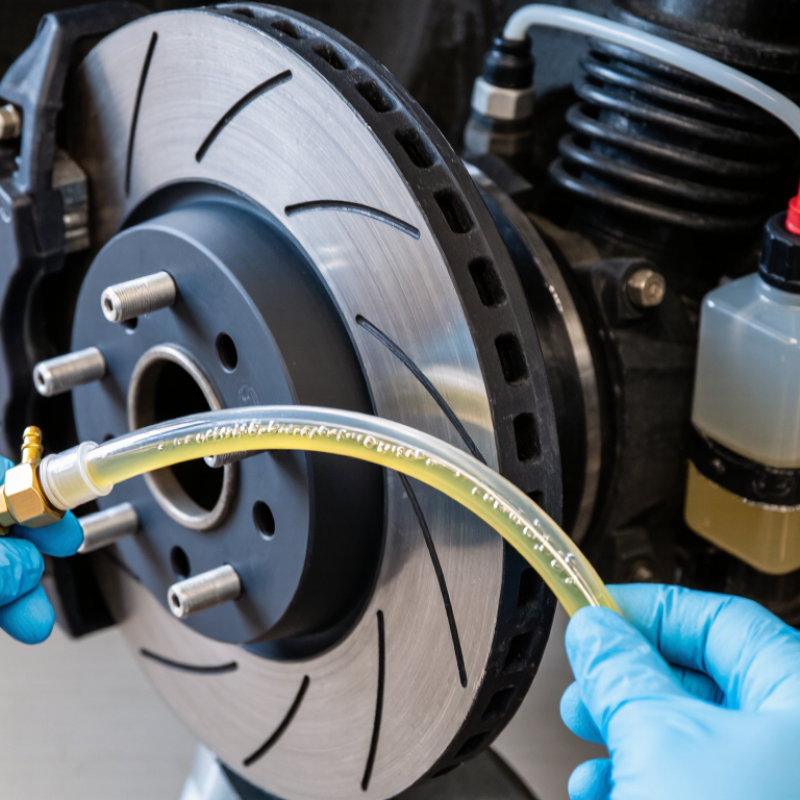
To check for air, bleed the brakes using the vehicle’s service instructions and specified fluid. Fit a clear hose over the bleeder screw and place its other end in a suitable container. With a helper applying steady pedal pressure, open the screw briefly, then close it before the pedal is released. Watch for bubbles in the fluid. Keep the reservoir topped up; if it runs dry, air can enter the system. A loose hose connection can also create bubbles, so check the setup before drawing conclusions.

Tips: Wear eye protection and protect painted surfaces from brake fluid. Follow the prescribed wheel sequence. After bleeding, check for leaks and a firm pedal before moving the car. A firm feel can still be misleading. If the pedal sinks, stays soft, or braking feels uncertain, do not drive; get qualified help. I would rather repeat a careful check than assume one clear-looking bleed means the job is done.

Verify the Repair and Know When to Seek Professional Help

After bleeding the brakes, verify the repair before moving the vehicle. With the engine off, press the pedal several times, then hold steady pressure. It should feel firm, not slowly sink toward the floor. Start the engine and check again; power assistance may change the pedal feel slightly. That difference can be easy to misread. Check the fluid level against the vehicle manual, and look around each accessible line connection, caliper, and wheel for fresh wetness. Brake lines are often opaque, so you usually cannot confirm trapped air by looking through them. A clear reservoir alone does not prove the system is air-free.

Only consider a cautious, low-speed test in a clear, traffic-free area if the pedal feels firm and no warning light is on. Apply the brakes gently, then stop and inspect for leaks again. Stop immediately if the pedal feels spongy, sinks, or braking seems uneven. Do not keep topping up fluid and assume the problem is fixed; a leak or incorrect bleeding sequence may remain. Some repairs are harder to judge than they look. If you are uncertain, see fluid loss, or cannot get a consistent pedal, have a qualified brake technician inspect the system. Do not drive the vehicle to a shop if braking feels unsafe; arrange professional assistance instead.

FAQS

What can let air into brake lines?

A leak, low fluid, or an opened system can let air in. Replacing a hose or caliper may also introduce air.

How does air affect braking?

Air compresses, unlike brake fluid. The pedal may feel soft or sink farther. Braking can become delayed or uneven.

Does a spongy pedal prove there is air?

No. Leaks or worn parts can also change pedal feel. Feel alone is not a reliable test.

What signs of a leak should I look for?

Check visible hoses, fittings, and lines for rust, damage, or wet spots. Brake fluid may leave a dark, slick patch.

Is topping up low brake fluid enough?

No. Low fluid may point to a leak, and topping it up can hide the problem. Have the cause checked.

How can air bubbles be checked?

A proper brake-bleeding procedure can reveal bubbles in fluid. Follow the vehicle’s service instructions, and keep the reservoir from running dry.

Is a bubble-free bleed enough to confirm the brakes are safe?

Not by itself. A loose hose connection can create misleading bubbles, and one clear bleed may not settle the question.

What should I do if the pedal sinks or braking feels uncertain?

Do not drive the car. Have a qualified technician inspect the system. I used to think repeated pedal pumping proved everything was fine. It doesn’t.

Conclusion

Air in the brake lines can make the pedal feel soft or spongy, increase stopping distance, and reduce braking performance. To inspect the system safely, park on level ground, secure the vehicle, let hot components cool, and gather suitable tools and protective equipment. Check the brake fluid level and look for dampness, corrosion, cracks, or other signs of leakage around the lines, fittings, and connections. Any fluid loss should be addressed before attempting to remove air, since a leak can allow air to return.

To check for trapped air, press the brake pedal and note whether it feels firm and holds pressure. If air is suspected, bleed the brakes using the vehicle’s recommended procedure, keeping the reservoir supplied with the correct fluid and watching for bubbles. Recheck the pedal feel and inspect for leaks after bleeding. If the pedal remains soft, fluid continues to escape, or you are unsure how to work safely, stop driving and have a qualified professional inspect the braking system.

Madeline

Madeline

Madeline is a dedicated marketing professional with a wealth of expertise in our company's core offerings. With a keen understanding of the industry, she brings a unique perspective to her role, consistently delivering high-quality content that highlights the superior aspects of our products. As......