Choosing brake pads is not simply a ceramic-versus-metallic decision. The real question is: What is the difference between ceramic and metallic pads under your vehicle’s actual conditions? City traffic, mountain descents, towing, winter salt, and daily noise tolerance can change the answer.
Grand View Research’s Automotive Brake Pad Market report identifies material development, durability, and reduced particulate emissions as major industry priorities. IMARC Group also reports continuing demand for quieter, cleaner, and more thermally stable friction materials. These reports support a practical point: modern pad selection is becoming more application-specific. Ceramic pads usually produce less visible dust and lower wheel noise. Semi-metallic pads often deliver stronger initial bite and better heat transfer. They may also create more dust, rotor wear, and audible friction. Neither material wins everywhere.
Automotive brake specialist Andrew Markel has repeatedly emphasized a crucial principle: “The best brake pad is the one matched to the vehicle and its use.” That advice deserves attention. A heavy SUV towing downhill does not behave like a compact car making short urban trips. Temperature matters. Rotor condition matters. Driver habits matter.
This guide compares China’s top 10 ceramic and metallic brake pad options through friction performance, noise, dust, heat resistance, rotor compatibility, testing evidence, and value. Some supplier claims look impressive but remain difficult to verify independently. That is an uncomfortable limitation. Buyers should examine certifications, laboratory results, warranty terms, and field feedback before trusting marketing language. The quietest pad is not always the safest choice. The strongest bite is not automatically the best value.
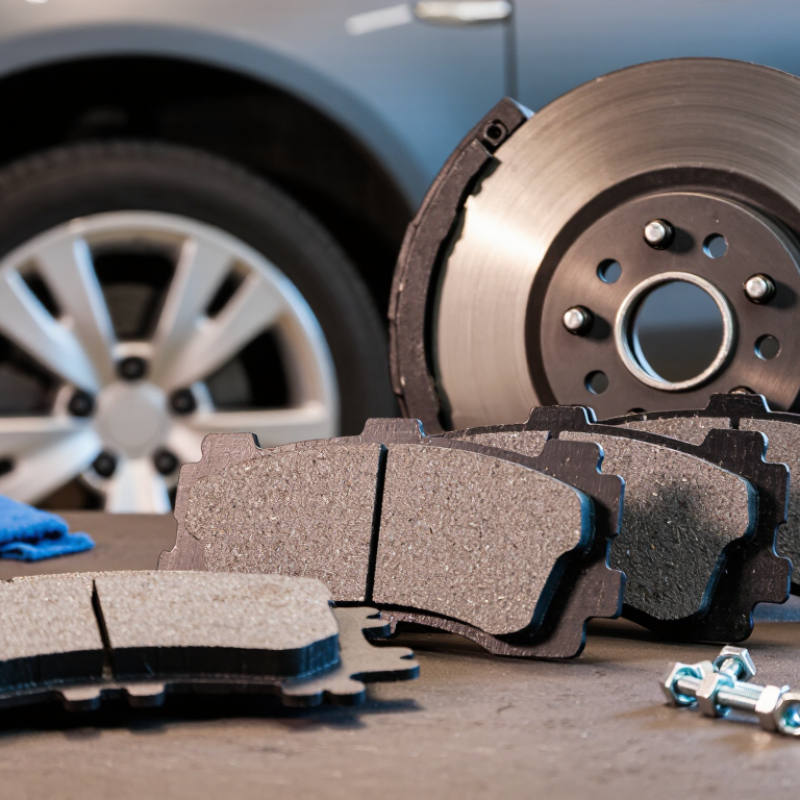
What Are Ceramic and Metallic Brake Pads?
Ceramic brake pads use dense ceramic fibers, fillers, and small amounts of metal. They usually create lighter-colored dust and produce less visible wheel staining. Their braking feel is often smooth and quiet during normal driving. However, ceramic compounds may cost more and can perform differently in very cold conditions.
Metallic pads contain steel, copper-free alloys, or other metal fibers. They transfer heat quickly and often provide strong bite during repeated braking. This makes them practical for heavy vehicles, towing, and demanding downhill routes. The trade-off can include more dust, sharper noise, and greater rotor wear. My workshop experience suggests that noise depends heavily on the caliper, rotor surface, and installation quality, not only the pad material.
SAE J866 classifies friction performance through coefficient ranges, including FF at 0.35–0.45 and GG at 0.45–0.55. These codes describe tested friction, not total stopping quality. The U.S. NHTSA’s FMVSS No. 135 uses a 100 km/h brake test and limits stopping distance to 70 meters under specified conditions. That benchmark helps explain why compound choice alone cannot predict real-world safety. Temperature, tire grip, vehicle load, and bedding-in matter too. I would not call ceramic universally better. That judgment is too simple.
| No. | Evaluation Dimension | Ceramic Brake Pads | Metallic Brake Pads | Practical Selection Guidance |
|---|---|---|---|---|
| 1 | Basic Composition |
Ceramic-based Made primarily from dense ceramic fibers, fillers, bonding materials, and small amounts of metal or other reinforcing materials. They do not contain asbestos in modern automotive applications. |
Made with a substantial proportion of steel, iron, copper, or other metal fibers combined with friction modifiers, fillers, and resin binders. Exact formulations vary by application. |
The friction material must match the vehicle, caliper, rotor, and intended operating conditions. Material type alone does not determine overall braking performance. |
| 2 | Friction and Stopping Performance | Usually provides smooth, predictable friction for normal road driving. Performance is generally consistent across everyday temperature ranges when the pad is correctly specified. | Often provides strong initial bite and high friction potential, especially in demanding applications. Some formulations maintain effective friction at higher temperatures. | Ceramic pads suit quiet daily driving. Metallic pads may be preferable for heavy-duty use, repeated high-energy stops, or applications requiring stronger pedal response. |
| 3 | High-Temperature Capability | Handles normal road temperatures well and offers stable performance when properly engineered. Some ceramic formulations are not intended for sustained racing or extreme thermal loads. | Generally tolerates high heat effectively and can dissipate heat efficiently because of its metal content. Severe duty can still cause fade, glazing, or accelerated wear. | For towing, mountainous routes, commercial vehicles, or track use, select a pad specifically rated for the expected temperature and duty cycle. |
| 4 | Brake Dust | Typically produces less visible dust, and the dust is often lighter in color. This can help wheels remain cleaner during normal use, although dust-free braking is not realistic. | Commonly produces more visible dust because metal fibers and wear debris are part of the friction process. The amount depends on the formula, rotor condition, and driving style. | Choose ceramic pads when wheel cleanliness is a major priority, while ensuring that the lower-dust formulation still meets the vehicle maker’s requirements. |
| 5 | Noise and Vibration | Often operates quietly and smoothly because of its material structure and controlled friction characteristics. Noise can still occur if hardware, lubrication, bedding, or rotor condition is poor. | May generate more noise or vibration, particularly with aggressive formulas, worn hardware, uneven rotors, or cold operating conditions. Proper shims and installation can reduce noise. | For passenger cars where low noise and refinement are important, a well-designed ceramic pad is often a practical option. Installation quality remains essential. |
| 6 | Rotor Compatibility and Wear | Usually offers a smooth contact surface and may be relatively gentle on rotors in normal service. Incorrect pairing or contaminated friction surfaces can still damage the rotor. | The higher metal content may increase rotor wear in some applications, especially with abrasive formulas or poorly matched rotors. It can also provide strong friction under severe conditions. | Always inspect rotor thickness, runout, surface condition, and minimum specifications before installing new pads. Pad replacement does not automatically require new rotors. |
| 7 | Cold-Weather Behavior | Generally delivers predictable braking in ordinary cold conditions, but performance depends on the specific compound and vehicle calibration. Initial friction may vary before the pad reaches its working range. | Some high-performance metallic compounds require more heat to reach their intended friction level. Street-oriented metallic formulas are designed to work at lower temperatures. | For normal winter driving, use a compound with a documented operating range suitable for the local climate rather than choosing solely by material label. |
| 8 | Service Life | Can provide long and consistent service life in everyday driving, but wear rate is affected by vehicle weight, traffic, temperature, rotor condition, and driving habits. | Can also be durable, particularly in high-load applications. Abrasive formulations, frequent heavy braking, and poor rotor condition may increase pad and rotor wear. | There is no universal mileage guarantee. Monitor pad thickness and replace pads before the friction material reaches the manufacturer’s minimum limit. |
| 9 | Cost and Value | Often carries a higher purchase price because of material formulation and manufacturing requirements. Lower dust, reduced noise, and smooth operation may provide added everyday value. | Frequently offers competitive pricing and strong performance per unit cost. Additional rotor wear, noise, or dust may influence the total ownership cost in some vehicles. | Compare the complete system cost, including pads, rotors, installation, cleaning, and expected service conditions—not only the initial pad price. |
| 10 | Best-Fit Applications | Commonly well suited to family cars, commuter vehicles, premium passenger cars, and drivers who prioritize quiet operation and low visible dust. | Commonly well suited to heavier vehicles, towing, utility vehicles, performance-oriented street use, and applications exposed to frequent high braking loads. | Select pads according to the vehicle’s original specification, axle position, electronic brake systems, load, climate, road conditions, and driving behavior. |
Ceramic pads use dense ceramic fibers, fillers, and small amounts of metal. They usually create lighter-colored dust.
Metallic pads contain steel, copper-free alloys, or other metal fibers. They transfer heat quickly during repeated braking.
Ceramic pads often feel smoother and quieter during normal driving. However, noise also depends on the rotor, caliper, and installation.
Metallic pads may suit heavy vehicles, towing, and steep downhill routes. They often provide strong initial bite and handle heat well.
No. That conclusion is too simple. Tires, vehicle load, temperature, and bedding-in also affect stopping performance.
Their metal friction material can produce darker dust and sharper noise. They may also increase rotor wear.
Compare friction stability, fade resistance, recovery, wear, and compressibility. Test results should use consistent tires, loads, temperatures, and bedding procedures.
They describe tested friction ranges. They do not prove complete stopping quality in everyday traffic.
No. Rain, cold starts, traffic, and neglected rotors can change braking behavior. Laboratory figures remain useful, but incomplete.
Check even backing-plate coating and accurate edge finishing. A poorly fitted pad may rattle inside the caliper.
This guide explains the key differences between ceramic and metallic brake pads, including their materials, operating characteristics, strengths, and limitations. What is the difference between ceramic and metallic pads? Ceramic pads are generally known for quieter braking, cleaner wheels, and smooth performance, while metallic pads often provide strong heat resistance, durable stopping power, and reliable performance under demanding conditions. However, the best choice depends on more than material alone.
The article also presents a practical framework for comparing brake pad quality and performance, focusing on stopping response, noise, dust production, heat management, wear resistance, driving conditions, and overall value. It introduces China’s top 10 ceramic and metallic brake pad options without relying solely on popularity, encouraging readers to evaluate product specifications, manufacturing consistency, testing standards, compatibility, and warranty support. By considering vehicle type, climate, traffic, driving style, load, and budget, drivers can select brake pads that deliver a balanced combination of safety, comfort, durability, and dependable everyday performance.

 Zizel Auto