In the realm of automotive braking systems, choosing between ceramic and metallic pads is crucial. Understanding "What is the difference between ceramic and metallic pads" can significantly impact vehicle performance and safety. Industry expert David Chen highlights, "Choosing the right pad material affects not just performance but also durability and noise levels." His insight reflects the complexities faced by consumers.
Ceramic pads offer low dust production and quieter braking but can be pricier. In contrast, metallic pads provide stronger braking force, especially under extreme conditions. However, they may result in more wear on rotors and increased noise. The 2022 Automotive Brake Technology report indicates that 65% of high-performance vehicles now use ceramic pads for their efficiency.
While both options present unique advantages, potential drawbacks exist. For instance, ceramic pads may struggle in extreme temperatures. Conversely, metallic pads can lead to quicker rotor wear. It’s essential to weigh these factors carefully. Ultimately, making an informed decision requires evaluating performance needs and driving conditions.
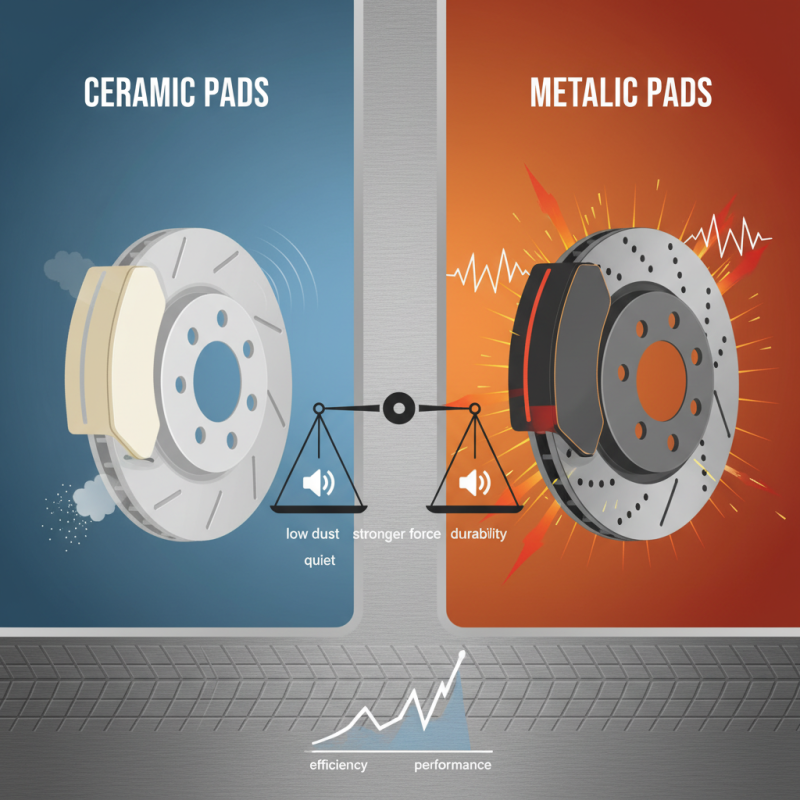
Ceramic pads are made from a mixture of fibers, fillers, and ceramic materials. They are known for providing a quiet braking experience. The strong resistance to heat helps reduce brake fade. These pads are ideal for everyday driving. They produce less dust, keeping wheels cleaner for longer. However, some drivers feel they lack the precision needed for high-performance applications.
Metallic pads consist of metal fibers combined with friction materials. This design ensures excellent stopping power, especially under heavy loads. They can handle higher temperatures, making them suitable for racing or heavy-duty use. However, metallic pads are often noisier. They tend to create more dust, which can damage wheels over time. For some, the increased performance comes with trade-offs. How they perform can vary based on driving conditions and personal preferences.
Ceramic and metallic pads differ significantly in composition and performance. Ceramic pads are composed of a blend of materials, including ceramic fibers and bonding agents. This composition makes them quieter and less prone to dust, leading to cleaner wheels. In contrast, metallic pads contain metal fibers and other alloying elements, enhancing their durability and heat resistance.
One notable difference is the heat dissipation capability. Metallic pads excel in high-temperature conditions, providing consistent performance under extreme braking scenarios. However, this can lead to increased noise and dust production. Ceramic pads, on the other hand, offer a smoother, quieter operation but may struggle with prolonged, high-intensity braking.
Tips: When choosing between ceramic and metallic pads, consider your driving habits. For city driving, ceramic pads may be more suitable due to their quieter performance. If you frequent hilly or racetrack areas, metallic pads could offer better durability.
Keep in mind that both types have their pros and cons. A balance between performance and comfort is essential. Regular checks on pad condition can also help ensure optimal safety and performance. Reflecting on your typical driving scenarios can inform better choices for vehicle maintenance.
When comparing ceramic and metallic brake pads, performance characteristics stand out.
Ceramic pads are known for their quiet operation and low dust levels. They provide consistent stopping power.
This makes them ideal for everyday driving. They perform well in various conditions, especially in urban settings.
On the other hand, metallic pads excel in high-performance situations. They offer superior heat dissipation.
This is crucial for sports cars or heavy-duty vehicles. However, they can be noisier and produce more dust.
Some drivers find their braking feel less smooth than ceramic options.
While ceramic pads often enhance comfort, metallic pads can deliver exceptional performance.
Each option has pros and cons. Your choice should consider driving style and vehicle type.
It's worth reflecting on the trade-offs.
When discussing brake pads, it's essential to understand the differences between ceramic and metallic options.
Ceramic pads are made from a combination of ceramic fibers, fillers, and sometimes metal. They are known for their quiet operation and low dust production. This can be appealing for daily drivers who prioritize comfort and cleanliness.
On the other hand, metallic pads contain metal fibers and provide excellent heat dissipation. They deliver strong stopping power, making them suitable for high-performance vehicles.
However, they can produce more noise and dust, which might be a concern for some drivers. The choice of brake pads comes down to personal needs and preferences.
Both types come with pros and cons. Ceramic pads tend to wear out faster under high-stress conditions, while metallic pads may not perform as well in cold weather. Striking a balance between comfort and performance is key.
It's important to evaluate your driving style and environment when selecting the right brake pads for your vehicle.
Ceramic and metallic brake pads are vital components in vehicles and machinery. They serve similar functions but differ significantly in applications. Ceramic pads are popular in passenger cars. They produce less dust and noise, enhancing comfort. In contrast, metallic pads are ideal for heavy-duty vehicles. They handle extreme temperatures and provide greater stopping force.
When it comes to automotive applications, ceramic pads excel in everyday driving conditions. Their low wear rate is a key advantage. However, under high-performance situations, they might fall short. Metallic pads, meanwhile, offer better performance for trucks and racing cars. They withstand more friction but can wear down rotors faster.
**Tip:** Always consider the type of vehicle and driving conditions when selecting your brake pads.
In other industries, ceramic pads find use in appliances and machinery. Their durability makes them suitable for domestic items like washing machines. Unfortunately, they may crack under extreme conditions. Metallic pads are utilized in construction equipment and manufacturing tools. Their strength is crucial for heavy usage, but the noise they produce can be a downside.
**Tip:** Balance performance needs with comfort and maintenance when choosing materials.
| Property | Ceramic Pads | Metallic Pads |
|---|---|---|
| Material Composition | Ceramics and composite materials | Metal (typically steel or copper) |
| Friction Performance | Stable performance under high temperatures | Can provide higher initial friction |
| Noise Level | Quieter operation | Tends to be noisier |
| Dust Production | Produces less brake dust | Produces more brake dust |
| Heat Resistance | Excellent heat dissipation | Good, but can fade under extreme conditions |
| Weight | Generally lighter | Heavier due to metal content |
| Common Applications | Passenger vehicles, eco-friendly vehicles | Heavy-duty vehicles, motorsports |
: Ceramic pads consist of fibers, fillers, and ceramic materials.
They provide a quiet braking experience and reduce brake fade.
Some drivers feel they lack precision for high-performance needs.
Metallic pads are made of metal fibers and friction materials.
They excel under heavy loads and high temperatures, ideal for racing.
They tend to be noisier and produce more dust over time.
They provide consistent stopping power and are suitable for daily driving.
Consider driving style and vehicle type for effective braking.
They are common in appliances and machinery for durability, but may crack.
Their noise and dust can damage wheels, requiring more upkeep and reflection.
When considering brake pads, a common question arises: "What is the difference between ceramic and metallic pads?" Both types serve the essential function of providing stopping power in vehicles, but they differ significantly in composition and performance. Ceramic pads are primarily made from ceramic materials combined with other non-metallic elements, while metallic pads contain a blend of metals, such as copper, steel, or iron, which enhance their durability and heat dissipation.
In terms of performance characteristics, ceramic pads tend to offer quieter operation and less dust creation, making them ideal for everyday driving. However, they may not perform as well under extreme conditions compared to metallic pads, which excel in high-temperature environments and provide better stopping power. Each type has its own advantages and disadvantages, leading to varied applications in automotive settings and other industries, where the choice often depends on specific driving needs and conditions.

Zizel Auto