China Top Brake Suppliers What Causes Brake Pedal Vibration?

Time:2026-11-12 Author:Henry
0%

A brake pedal that pulses underfoot can make a smooth road feel suddenly rough. Drivers often ask, “What causes a brake pedal to pulse or vibrate?” The answer is not always a warped rotor. SAE International technical papers on brake judder describe how changing brake torque can create vibration at the pedal or steering wheel. Bosch’s Automotive Handbook also treats braking as a system, where friction, temperature, and component condition interact. These sources offer useful engineering context, but they cannot diagnose a specific vehicle.

Braking researcher Andrew J. Day, author of Braking of Road Vehicles, has examined how brake-system forces affect vehicle behavior. A practical paraphrase of that engineering perspective is: “A pulsing pedal is a symptom, not a diagnosis.” That distinction matters. A technician may check rotor thickness variation and lateral runout with a micrometer and dial indicator, then inspect pads, caliper movement, wheel bearings, and suspension joints. The readings must match the vehicle maker’s limits. Small differences matter.

For China’s top brake suppliers, consistent friction materials and precise manufacturing are central to reducing unwanted vibration. Yet even quality parts can pulse if installation, bedding, or surrounding components are overlooked. Sometimes the cause is less obvious. A vibration that appears only during firm braking, for example, deserves a careful inspection rather than a parts guess. The evidence from measurements—not the pedal feel alone—should guide the repair.
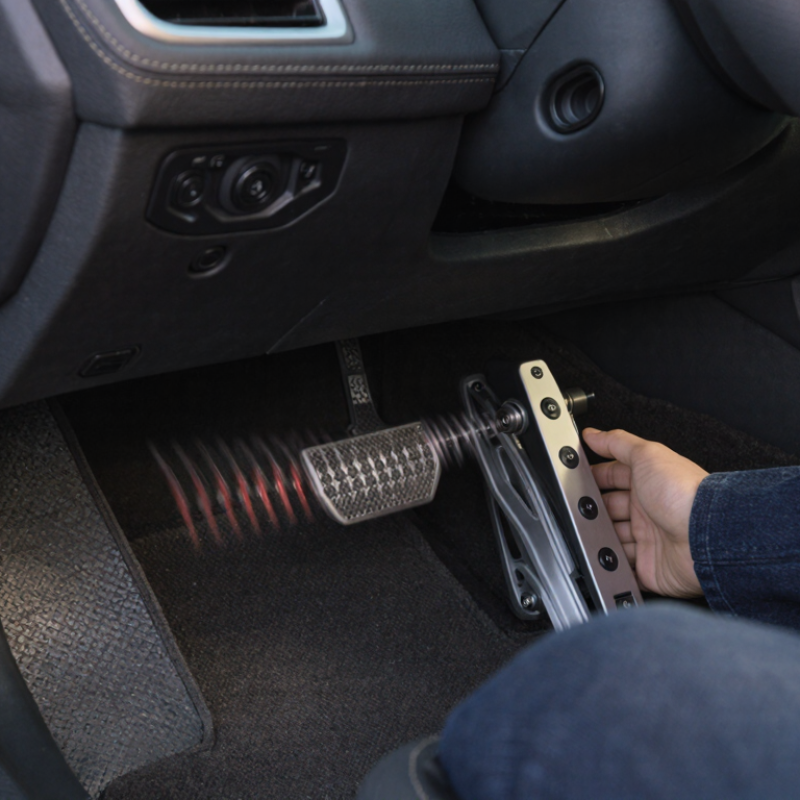
China Top Brake Suppliers What Causes Brake Pedal Vibration?

What Brake Pedal Vibration Feels Like and When It Occurs

China Top Brake Suppliers: What Causes Brake Pedal Vibration?

What Brake Pedal Vibration Feels Like and When It Occurs

Brake pedal vibration may feel like a quick pulse beneath your shoe, a steady shudder, or a repeated knock. The timing offers clues. Pulsing during a firm stop can come from ABS operation, especially on loose or slippery roads. A vibration during ordinary braking deserves attention. SAE technical literature commonly classifies brake judder by frequency: low-frequency judder is roughly 5–50 Hz, while higher-frequency vibration can range around 100–500 Hz. These are diagnostic ranges, not a home test.

If the pedal shakes mainly at highway speeds, uneven rotor thickness or disc runout may be involved. The steering wheel may tremble too, particularly through the front brakes. Vibration at low speeds, after long downhill braking, or only when the brakes are hot can point to different conditions. Tire or suspension problems can also imitate brake judder. The sensation alone cannot confirm the cause. Small details matter.

Measure Rotor Thickness Variation: 0.015 mm May Cause Brake Pulsation

Brake pedal vibration may come from rotor thickness variation, or DTV. A difference of 0.015 mm can produce noticeable brake pulsation on some vehicles. The threshold is not universal; vehicle design, rotor condition, and braking temperature all matter. The pedal may pulse more clearly during a gentle stop from moderate speed. That sensation is a clue, not a diagnosis.

Tips: Use a micrometer, not a visual check. Measure the rotor at several evenly spaced points, keeping each reading on the same track. Clean rust and debris from the contact area first. Record every reading.

If the spread approaches 0.015 mm, compare it with the vehicle’s service specification before deciding on repairs. Also check rotor runout, hub cleanliness, pad deposits, and caliper movement. Runout can gradually create thickness variation, so replacing a rotor without checking the hub may not solve the problem. Measurements can be awkward near the rotor edge, and one rushed reading can mislead. Take care around hot components, and let them cool before inspection. A qualified technician can confirm the readings and identify the source of the vibration.

What Causes Brake Pedal Vibration?

Brake disc thickness variation (DTV) can cause brake pedal pulsation. The chart shows illustrative rotor measurements; 0.015 mm is a reference value, not a universal service limit.

DTV is the difference between the thickest and thinnest points on a rotor. Measure at multiple points around the rotor with a suitable micrometer and follow the vehicle manufacturer's specifications.

Check Rotor Runout Against Vehicle Specs; Typical Limits Are 0.05–0.10 mm

Brake pedal vibration under braking can come from rotor runout, thickness variation, or uneven hub seating. Measure runout with a dial indicator, not by judging the pedal alone. Clean rust from the hub face, secure the rotor evenly, and rotate it slowly. The indicator needle should move only slightly. A commonly cited workshop screening range is 0.05–0.10 mm, but the vehicle’s service specification takes priority. SAE International’s technical literature on brake judder also distinguishes rotor geometry faults from vibration caused by other components.

If measured runout exceeds the vehicle limit, inspect the hub face, bearing play, and rotor mounting before replacing parts. A rusty patch only a few millimeters wide can tilt the rotor. Recheck after tightening the wheel fasteners evenly to the specified torque. Excessive runout can contribute to thickness variation over time, which may produce a pulsing pedal. The exact tolerance varies by vehicle, so the general range is not a pass-or-fail rule.

Tips: Record the indicator’s highest reading and mark that point. Then index the rotor on the hub and measure again; a changed reading can help separate rotor error from hub error. Don’t guess. A clean setup matters.

Trace Causes: Uneven Deposits, Hub Rust, Caliper Drag, or Loose Fasteners

China Top Brake Suppliers: What Causes Brake Pedal Vibration?

Brake pedal vibration often points to uneven braking force, but the pedal alone cannot identify the fault. Uneven friction deposits on the rotor can create a pulsing sensation, especially during repeated stops or downhill driving. The rotor may not be visibly warped. A mechanic can check its thickness and runout with proper measuring tools. That matters. The diagnosis is not always tidy.

Rust trapped between the wheel hub and rotor can prevent the rotor from sitting flat. Even a thin, rough layer may cause vibration after wheel installation. Caliper drag is another possibility: a sticking piston or slide pin can keep one pad touching the rotor. Look for a hot wheel, a burning smell, or a vehicle pulling to one side. Loose wheel fasteners can also affect clamping force. Do not guess at torque; use the vehicle maker’s specification.

Tips: Note when the vibration occurs, such as during gentle braking or only at highway speed. Share those details with a qualified technician. Ask for checks of rotor runout, hub cleanliness, caliper movement, and fastener torque. If vibration is severe, braking feels weak, or the vehicle pulls sharply, stop in a safe place and arrange an inspection. Short test drives can miss intermittent faults.

Evaluate Brake Suppliers by UNECE R90 Approval and IATF 16949 Certification

Brake pedal vibration often points to changing brake torque, not one single fault. Rotor thickness variation, lateral runout, uneven friction deposits, or rust between the hub and disc can make the pedal pulse. A capable supplier should explain how its brake components are controlled, while noting that installation and vehicle condition matter too. That distinction builds trust.

When comparing suppliers, request UNECE R90 approval evidence for the exact replacement component and vehicle application. Approval indicates that a product meets specified performance and conformity requirements; it does not guarantee that a vibration complaint will disappear. Check approval markings, application coverage, and test documentation. IATF 16949 certification provides evidence of a structured automotive quality-management system, including process controls and corrective actions. Verify the certificate’s validity, scope, and manufacturing site. Paperwork helps, but it is not everything.

Tips: Ask for traceable batch records and details on how disc thickness variation is measured. Confirm hub cleanliness, wheel-fastener torque, and bedding procedures during installation. If vibration remains, inspect the complete brake assembly and suspension. Replacing parts blindly can waste time. Supplier feedback is useful, though sometimes incomplete.

FAQS

What does brake pedal vibration feel like?

It may feel like a quick pulse beneath your shoe, a steady shudder, or repeated knocks. The sensation alone cannot confirm the cause.

Is pulsing during braking always a problem?

Not always. ABS may pulse during a firm stop on loose or slippery roads. Pulsing during ordinary braking deserves attention.

What can cause vibration at highway speeds?

Uneven rotor thickness or disc runout may contribute, especially if the steering wheel also trembles. Tire or suspension problems can imitate brake judder.

Can rotor thickness variation cause pedal pulsation?

Yes. A difference near 0.015 mm may cause noticeable pulsation on some vehicles. That threshold is not universal.

How should rotor thickness be measured?

Use a micrometer at several evenly spaced points on the same track. Clean rust and debris first, then record each reading. One rushed measurement can mislead.

What else should be checked before replacing a rotor?

Check rotor runout, hub cleanliness, friction deposits, and caliper movement. Runout may gradually create thickness variation. A new rotor may not fix the cause.

What details should drivers note before an inspection?

Record speed, road conditions, and whether vibration changes as the brakes warm. Avoid repeated hard stops as a test. A log helps, but it is not a diagnosis.

How can someone assess a brake component supplier?

Request UNECE R90 approval evidence for the exact component and vehicle application. Verify IATF 16949 certification, its scope, and manufacturing site. Paperwork helps, but it is not everything.

Conclusion

What causes a brake pedal to pulse or vibrate? The sensation often appears during braking as a repeating movement through the pedal, sometimes accompanied by steering-wheel shake. It may become more noticeable at certain speeds or under firmer braking. A useful first step is to measure rotor thickness variation: even a difference of about 0.015 mm may contribute to brake pulsation, depending on the vehicle and its service specifications.

Technicians should also check rotor runout against the vehicle maker’s limits; typical reference values are around 0.05–0.10 mm, but the correct specification varies. Uneven friction-material deposits, rust between the hub and rotor, a dragging caliper, or loose fasteners can also cause vibration. When comparing replacement brake components, consider suppliers that can demonstrate UNECE R90 approval and IATF 16949 certification, while confirming that the parts match the vehicle’s requirements.

Henry

Henry

Henry is a dedicated marketing professional with a profound expertise in the company's offerings. With years of experience in the industry, he possesses an impressive understanding of the market dynamics and consumer behaviors that drive success. Henry is committed to sharing his insights through......