Why does my steering wheel shake when braking? It is a common question, but the answer is rarely as simple as “bad brakes.” A pulsing steering wheel can point to uneven brake rotor thickness, a sticking caliper, worn suspension parts, or a loose wheel. Sometimes, the vibration begins only after several hard stops. That detail matters.
Automotive engineer Jason Fenske explains the diagnostic mindset clearly: “A vibration is a symptom, not a diagnosis.” His point is practical. The steering wheel may shake because braking forces travel through the front hubs, bearings, tie rods, and suspension. A technician should inspect the entire system, not replace rotors automatically. I have seen drivers describe a gentle tremor as harmless, then discover a loose wheel fastener or badly worn bushing. That assumption can become expensive, or dangerous.
This guide examines the most likely causes, the warning signs, and the checks a qualified technician can perform. You may notice a rhythmic pulse through your hands, a slight pull to one side, or a brake pedal that feels uneven under your foot. Record when it happens. Note the speed, road surface, brake temperature, and whether the vehicle vibrates during normal driving. Small details help separate brake judder from tire imbalance or suspension wear. The diagnosis is not always obvious. That is the honest part. If the shaking is severe, sudden, or accompanied by grinding, smoke, or a burning smell, stop driving and seek professional inspection.
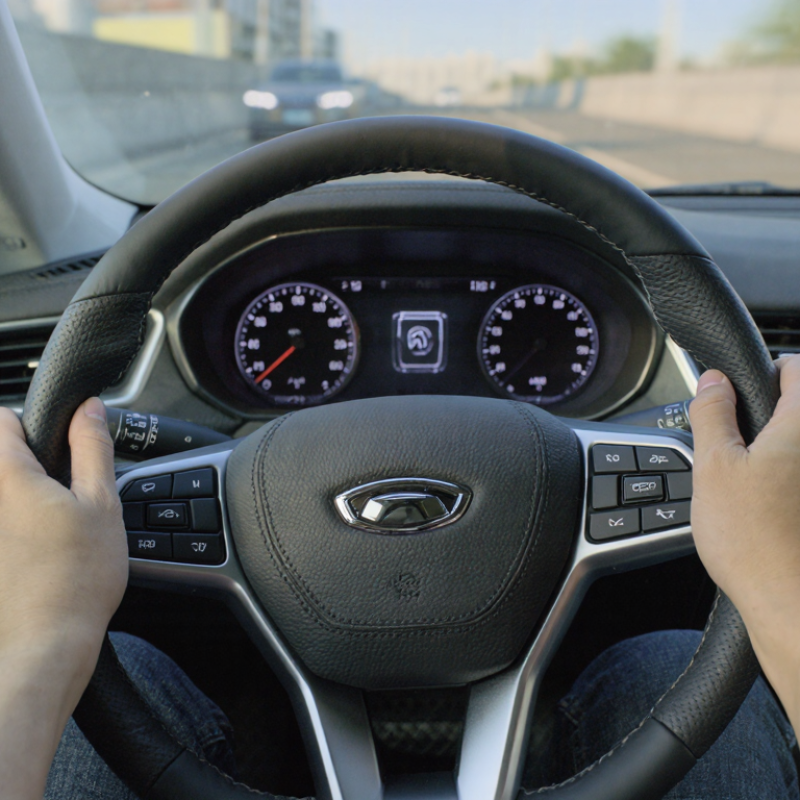
When the steering wheel shakes during braking, the front brake system usually deserves attention first. I once called this a “warped rotor,” but that shortcut is often wrong. Brake disc thickness variation, uneven friction material transfer, loose wheel hardware, and worn suspension parts can create similar vibrations. The shake may feel strongest through the wheel during moderate braking, while a brake pedal pulsation often points toward disc-related variation. It is not a perfect rule.
The UK Driver and Vehicle Standards Agency’s 2023–24 MOT data places brake defects at roughly one in ten recorded test failures, showing how commonly braking faults appear in real vehicles. SAE technical literature also identifies disc thickness variation and friction-layer changes as major contributors to brake judder. A technician should measure disc thickness, lateral runout, caliper movement, and wheel torque, rather than replacing parts by guesswork. Check the wheel nuts, too. Small details matter.
If the vehicle pulls sideways, produces grinding sounds, or shows a brake warning lamp, stop driving when safe and arrange a professional inspection. Uneven pad wear can indicate a sticking caliper, while vibration only at high speed may involve tyres or suspension instead. Road salt, repeated hard stops, and long downhill braking can worsen symptoms. My own reflection is simple: the steering wheel reports a problem, not its exact cause. Diagnosis still requires measurements, service records, and a careful road test.
Steering-wheel shaking that appears mainly during braking commonly indicates front-brake judder associated with uneven brake-disc thickness or excessive lateral runout. The chart shows the calculated rotational frequency of a typical 0.65 m wheel at different road speeds, using a 2.05 m rolling circumference. If the vibration rhythm changes with vehicle speed and becomes noticeable only when braking, the front brake discs, pads, caliper operation, wheel fitment, and suspension components should be inspected. These values describe rotational behavior, not a failure diagnosis.
Calculation: wheel rotational frequency = road speed ÷ 2.05 m rolling circumference. One wheel revolution produces one brake-disc revolution.
A shaking steering wheel during braking often points to a problem near the front wheels. The first guess is not always right. Worn brake rotors can develop uneven thickness or excessive runout. This creates a pulsing force through the caliper and steering system. You may feel it most clearly between 50 and 70 kilometers per hour. A pulsating brake pedal supports this possibility.
Pay attention to when the vibration begins. Shaking during light braking may suggest rotor variation or a sticking caliper. Vibration without braking can indicate tire imbalance, wheel damage, or a worn suspension part. A clunk over bumps deserves separate attention. Check whether the vehicle pulls left or right. Uneven heat near one wheel can reveal caliper trouble, but avoid touching hot components.
A qualified technician should inspect wheel fasteners, tire condition, suspension joints, and wheel bearings. Measuring rotor runout with a dial indicator provides better evidence than visual inspection alone. The hub mounting surface must also remain clean and flat. I have seen a seemingly faulty rotor blamed too quickly; corrosion between the hub and rotor was the real cause. That mistake wastes time and money. Do not ignore sudden or severe shaking. Stop driving and arrange a professional inspection when steering control feels uncertain.
A shaking steering wheel during braking often points to a problem near the front wheels. The most common cause is uneven brake disc thickness or uneven friction material on the disc surface. Drivers may feel a pulsing brake pedal at the same time. The vibration usually becomes stronger during higher-speed stops. It can feel like the wheel is trembling in your hands.
Worn suspension parts can create similar symptoms. Loose tie-rod ends, damaged control-arm bushings, or worn wheel bearings may allow unwanted movement under braking. A sticking caliper can also apply pressure unevenly and produce heat marks on one disc. In workshop inspections, I check disc runout with a measuring gauge, then inspect pad wear and wheel movement. Guessing from sound alone is unreliable. A quick visual check can mislead.
Wheel imbalance usually causes shaking at a steady speed, not only during braking. However, a bent wheel or loose wheel fasteners can make braking vibration worse. Do not ignore a sudden change. Stop driving if the car pulls sharply, produces grinding sounds, or shows a loose wheel. An experienced technician should inspect the braking system, suspension, and wheel installation together. I have seen simple pad deposits blamed for larger suspension problems, so the first explanation is not always the right one.
Why Does My Steering Wheel Shake When Braking?
A shaking steering wheel usually signals uneven braking force, but the brake disc is not always guilty. I begin by noting when the vibration appears, such as during light braking, hard stops, or downhill driving. A pulsing pedal often points toward disc thickness variation. A loose wheel, worn suspension joint, or damaged tire can create similar symptoms.
Safety comes first. Park on level ground, apply the parking brake, and let the brakes cool completely. During a careful road test, I check whether the shake changes with vehicle speed. I then inspect wheel nuts, tire condition, brake pad wear, and caliper movement. The wheel should be secured with a calibrated torque wrench, not guesswork. With a dial indicator and micrometer, a qualified technician can measure disc runout and thickness variation against the vehicle service specification.
Measure twice.
If the disc exceeds its limit, replacement or approved machining may solve the vibration. Both discs on the same axle should be assessed, and new pads need correct bedding through several moderate stops. A sticking caliper requires cleaning, lubrication, or replacement by a trained professional. Worn bushings or tie-rod ends must be repaired before blaming the brakes. I once replaced pads too quickly and missed a loose suspension joint; the vibration returned within days. That mistake reinforced a basic lesson: confirm the cause before buying parts. If braking pulls sharply, the pedal feels soft, or metal-on-metal noise appears, stop driving and arrange an inspection.
| Step | Observed Symptom | Most Likely Cause | Diagnostic Check | Typical Measurement or Standard | Recommended Repair | Urgency | Estimated Labor Time |
|---|---|---|---|---|---|---|---|
| 1 | Steering wheel shakes mainly when braking from moderate or high speed. | Front brake disc thickness variation, lateral runout, or uneven friction deposits. | Road-test the vehicle safely, then inspect the front discs for blue spots, grooves, scoring, and uneven pad transfer. | Disc runout is commonly checked against the vehicle service limit; many passenger vehicles use limits around 0.05–0.10 mm, but the exact limit varies. | Measure the discs and hub faces. Resurface only when disc thickness remains above the discard specification; otherwise replace the affected discs and pads as a matched axle set. | Medium to High | 1.5–3.0 hours |
| 2 | Brake pedal pulses at the same time as the steering wheel shakes. | Disc thickness variation or excessive disc runout. | Use a dial indicator for disc lateral runout and a micrometer at several points around the braking surface. | Thickness readings should remain within the manufacturer’s variation limit; a common practical reference is approximately 0.015–0.025 mm maximum variation. | Correct the underlying cause, including a dirty hub, incorrect wheel installation, seized hardware, or a damaged disc. Replace components that are outside specification. | High | 2.0–3.5 hours |
| 3 | Vehicle pulls to one side during braking, with uneven pad wear. | Sticking caliper piston, seized guide pin, restricted flexible brake hose, or unequal hydraulic pressure. | Compare inner and outer pad thickness, inspect guide pins, and check whether both front wheels release freely after braking. | Pad wear should be relatively even on each caliper. A noticeable difference between inner and outer pads indicates a possible mechanical or hydraulic fault. | Clean and lubricate suitable sliding surfaces, replace damaged guide pins or seals, and replace a restricted hose or faulty caliper when necessary. | High | 1.5–4.0 hours |
| 4 | Shake occurs only under hard braking and disappears during light braking. | Overheated friction material, uneven pad deposits, or a disc surface affected by repeated high-temperature braking. | Inspect for heat discoloration, localized pad deposits, cracking, and abnormal friction-surface texture. | There is no universal visual temperature limit; repeated discoloration, cracks, or a severe hot spot indicates that further inspection is required. | Replace damaged discs and pads, inspect caliper operation, and follow a proper bedding-in procedure after repair. | Medium | 1.5–3.0 hours |
| 5 | Steering wheel shake is present even when the brake pedal is not applied. | Wheel imbalance, bent wheel, tire defect, worn suspension joint, or wheel-bearing play rather than a brake-only fault. | Check tire condition and inflation, balance the wheels, inspect wheel runout, and test ball joints, tie-rod ends, bushings, and wheel bearings. | Tire pressure must match the vehicle placard. Wheel and tire runout limits vary; measurable play in a safety joint or bearing requires correction. | Balance or replace damaged tires and wheels, then repair worn suspension or bearing components before evaluating brake vibration again. | Medium to High | 1.0–4.0 hours |
| 6 | Vibration begins after wheel or brake service. | Uneven wheel fastener tightening, debris between the hub and disc, or incorrect component installation. | Remove the wheel and inspect the hub-to-disc mounting faces. Reinstall the wheel using a calibrated torque wrench. | Wheel fastener torque must follow the vehicle specification. Excessive or uneven torque can distort the disc mounting position. | Clean all mating surfaces, verify correct component fitment, and tighten wheel fasteners in a crisscross sequence to the specified torque. | High | 0.5–1.5 hours |
| 7 | Grinding noise, metal-on-metal contact, or severe vibration occurs during braking. | Brake pads worn beyond the friction material, damaged discs, loose hardware, or a failing caliper. | Stop driving when safe and inspect the complete brake assembly, including pad backing plates, disc edges, retaining hardware, and caliper mounting bolts. | Brake pad thickness must remain above the vehicle’s minimum specification. Pads near or below approximately 3 mm generally require prompt replacement. | Replace damaged pads and discs, repair loose or damaged hardware, and verify caliper security and hydraulic condition. | Immediate | 2.0–5.0 hours |
| 8 | Brake vibration remains after installing new discs and pads. | Uncorrected hub runout, caliper binding, improper bedding-in, suspension looseness, or a problem on the opposite axle. | Repeat runout measurements, inspect hub bearing play, check caliper release, verify suspension tightness, and review the bedding-in process. | New components must still be checked against vehicle-specific runout, thickness, torque, and minimum thickness specifications. | Identify and repair the root cause rather than repeatedly replacing discs. Complete a controlled road test after all measurements are within specification. | High | 2.0–5.0 hours |
| 9 | No obvious mechanical fault is found, but mild vibration is felt during the first few stops after repair. | New friction surfaces have not completed their bedding-in process. | Confirm that the pads and discs are correctly installed and perform a controlled bedding procedure on a safe road. | Use several moderate decelerations with cooling time between applications; avoid holding the pedal firmly after a hot stop. | Follow the component manufacturer’s bedding instructions. If vibration persists after cooling and bedding, repeat the inspection and measurements. | Low, if mild and temporary | 0.5–1.0 hour |
| 10 | Final road test shows no pull, pedal pulsation, abnormal noise, or steering shake. | Brake system and related wheel or suspension components are operating normally after repair. | Test braking progressively from low and moderate speeds, confirm straight tracking, and recheck for leaks or loose hardware. | The brake pedal should remain firm, braking should be balanced, and no warning light or abnormal noise should appear. | Record the work completed, advise a short inspection after initial driving, and recommend immediate review if vibration returns. | Routine Follow-Up | 0.5–1.0 hour |
A shaking steering wheel during braking is not a symptom to ignore. In practical inspections, vibration often appears through the hands before damage becomes obvious. Mild pulsing may indicate uneven brake-disc thickness, but that is not the only possibility. A loose wheel, damaged tire, worn suspension joint, or sticking caliper can create similar movement. The steering wheel is giving you information. Treat it seriously.
Stop driving as soon as safely possible if shaking becomes violent, the vehicle pulls, or braking distance increases. Do not continue at highway speed. Grinding, smoke near a wheel, a burning smell, or a warning light requires urgent attention. Park on firm ground, switch on hazard lights, and arrange a professional inspection. Never touch hot brake parts. They can remain dangerously hot.
A qualified technician should check wheel fasteners, tire condition, brake measurements, caliper movement, and suspension play. A road test can help, but only after basic safety checks. Replacing one part without finding the cause can waste money and leave the fault active. A common mistake is blaming warped discs too quickly; loose hardware or tire damage may be responsible. Diagnosis matters. If the vibration is slight and predictable, book service promptly instead of guessing. It may feel minor today. It may not.
The front brake system deserves attention first. Uneven disc thickness, friction transfer, loose wheel hardware, or worn suspension parts may cause it. The exact cause remains uncertain.
No. “Warped disc” is a convenient shortcut, but it can mislead. A technician should measure disc thickness, lateral runout, wheel torque, and caliper movement.
Pedal pulsation often relates to uneven brake-disc thickness or friction material changes. It is not a perfect rule.
Stop when safe if shaking becomes violent, braking distance increases, or the vehicle pulls sideways. Do not continue at highway speed.
Grinding, smoke near a wheel, a burning smell, or a brake warning lamp needs urgent attention. Park on firm ground and use hazard lights.
Yes. Loose wheel nuts or damaged wheel hardware can imitate brake problems. Check them carefully, but never rely on guesswork alone.
Yes. A damaged tire, worn suspension joint, or vibration only at high speed may point away from the brakes. Small details matter.
The inspection should include wheel fasteners, tire condition, brake measurements, caliper movement, and suspension play. A careful road test can add useful evidence.
Road salt, repeated hard stops, and long downhill braking may worsen symptoms. Heat can remain in brake parts after stopping. Never touch them immediately.
No. Book professional service promptly, even if the vibration feels minor. A quick assumption can be wrong, and replacing one part may waste money.
Why does my steering wheel shake when braking? This common warning usually indicates that braking force is not being applied evenly, often because of uneven brake rotor surfaces, worn brake pads, or looseness in the steering and suspension system. The vibration may appear mainly at certain speeds, become stronger during hard braking, or be accompanied by pulsing in the brake pedal. Careful observation of when the shaking occurs can help narrow down its source.
A proper diagnosis should begin with checking the brake pads, rotors, calipers, wheel nuts, tires, and suspension components for wear, damage, or improper installation. A technician may measure rotor thickness and runout, inspect wheel alignment, and test-drive the vehicle under controlled conditions. Repairs can include replacing or servicing worn brake parts, tightening loose hardware, correcting wheel or tire problems, and repairing damaged suspension components. If the shaking is severe, suddenly worsens, or comes with pulling, grinding, reduced braking power, or warning lights, stop driving when safe and seek immediate professional inspection.

Zizel Auto